
"They (government) are taking good care of whatever is possible," the bench observed.

The Supreme Court on Friday said the trial court's finding that Aam Aadmi Party leader Manish Sisodia was responsible for delaying the trial in the Delhi excise policy cases was not supported by the record.

Ghosh's elder son, Biswajit, claimed that this was a planned attempt to murder his father, and alleged that Shahjahan pulled strings sitting in jail to carry out the crime.

The Supreme Court will hear a suo motu case regarding the relocation of stray dogs in Delhi-NCR following widespread protests against an earlier order. A new three-judge bench will review the matter, focusing on the implementation of animal birth control rules and the creation of adequate shelters.

With the livelihood of nearly 5,000 people at stake, and FIFA, the Asian Football Confederation and global players' union FIFPRO keeping a close watch, the Court fixed August 28 as the next date of hearing.

The Supreme Court has questioned the practice of Governors withholding assent to bills indefinitely, stating that it renders the constitutional provision of 'as soon as possible' meaningless.
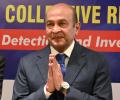
The Supreme Court addressed concerns about misinformation spreading related to an incident involving Delhi High Court judge Justice Yashwant Varma. The court clarified that the proposal to transfer Justice Varma to Allahabad High Court was independent of an internal investigation into the discovery of a large sum of cash at his residence following a fire. The Delhi High Court Chief Justice is conducting the investigation and will submit a report to the Chief Justice of India today.
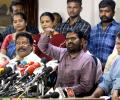
The Supreme Court has suggested Tamil film director and politician Seeman tender an unconditional apology to an actor who accused him of rape in 2011. The court is hearing Seeman's plea to quash the case against him.

The Supreme Court has questioned the 'arbitrariness' in the consideration of 'criteria appointment' for Short Service Commission (SSC) women Army officers seeking permanent commission, compared to their male counterparts. The court is hearing a plea from women officers challenging the denial of permanent commission.

Delhi Police strongly opposes bail pleas of activists Umar Khalid, Sharjeel Imam, and others in the February 2020 riots case, claiming it was a pre-planned attack on the nation's sovereignty and an attempt to divide society on communal lines.
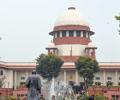
Swamy Shraddananda, jailed for 30 years for killing his wife, has moved the Supreme Court seeking authorities to decide his mercy plea before the President in December, 2023.

The SC has sought a response from the Centre on a plea seeking the restoration of statehood to Jammu and Kashmir.

The Madhya Pradesh High Court dismissed a petition seeking a stay on the release of the Hindi film 'Haq', which is inspired by the life and legal struggle of Shah Bano Begum. The court found the petition devoid of merit, clearing the way for the film's release.

'Grassroots-level corruption, which disrupts the last-mile work, cannot be ignored in your enthusiasm and drive to get going to complete the project.' 'Like it was in MGNREGA, in some states, it is the case with the Jal Jeevan mission.' 'The last minute levels of corruption can ruin the intent of the project itself.' 'When you see that people can game a particular well-intended and well-crafted project, you need to correct that.'
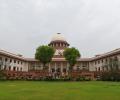
The Supreme Court on Thursday said the executive and the legislature would decide whether persons, who had availed quota benefits and were in a position to compete with others, were to be excluded from reservation.
The Supreme Court is hearing arguments regarding a presidential reference on whether fixed timelines can be imposed on governors and the president for acting on bills passed by state legislatures. The court is considering objections to the maintainability of the reference under Article 143 of the Constitution.

The Supreme Court is scheduled to pronounce interim orders on key issues related to the Waqf (Amendment) Act, 2025, including the power to denotify waqf properties.

Current situation risks rendering ongoing operations untenable: ISL clubs to AIFF

It also aims to reduce the powers of the Supreme Court, with some authorities shifted to the proposed Constitutional Court, and immunity to the president from criminal proceedings for life.
The Supreme Court of India has ruled that a governor has discretion under Article 200 to refer a state bill to the President or return it to the legislature, and is not bound by the advice of the council of ministers. The court clarified that a governor cannot simply withhold a bill.
The Supreme Court is scheduled to pronounce interim orders on key issues related to the Waqf (Amendment) Act, 2025, including the power to denotify properties declared as waqf.

Denmark's Mia Blichfeldt on Tuesday launched a fresh criticism of playing conditions at the new venue of the IG Stadium, in New Delhi, saying the shift in halls has done little to address the unhealthy and unprofessional surroundings for players and called for apex body BWF's intervention to improve the scenario ahead of the World Championships.

The Supreme Court of India has directed its registry to call for a report from IIT Kharagpur and Kota, Rajasthan, after the suicides of a student and a NEET aspirant came to light. The court is seeking to ascertain whether FIRs were registered in both cases, highlighting the disturbing pattern of student suicides in educational institutions. The court has also previously ordered the formation of a national task force to address mental health concerns and prevent suicides in higher educational institutions.

The top court also referred to the distinctions achieved by women officers, and put out an example of Col Qureshi's achievements.

The stage is set for a direct contest between NDA nominee C P Radhakrishnan and joint opposition candidate B Sudershan Reddy for the September 9 vice-presidential election. Nominations have been scrutinized and accepted.

A three-judge Supreme Court bench will hear petitions challenging the constitutional validity of the Waqf (Amendment) Act, 2025, on April 16. The petitions, including those by politicians and the All India Muslim Personal Law Board (AIMPLB) and Jamiat Ulama-i-Hind, were filed in the top court challenging the validity of the newly-enacted law. The Centre has filed a caveat in the apex court, seeking a hearing before any order is passed.

The Supreme Court of India has affirmed a child's right to the affection of both parents, even when they live apart or in different countries. The court ordered video interaction between a father and his son living in Ireland, emphasizing the importance of maintaining a relationship for the child's well-being.

The Reference has asked the court for its view whether the verdict in the 2G case be given retrospective effect for radio waves granted since 1994.

Chief Justice of India Sanjiv Khanna has recommended the impeachment of Allahabad High Court judge Yashwant Varma following an investigation into a cash discovery incident at his residence. The recommendation follows a report by a Supreme Court-appointed committee that confirmed allegations of cash discovery against Justice Varma. The CJI's recommendation is based on the established in-house procedure for dealing with allegations against judges of constitutional courts.
The application sought direction for 'X' to take down the video immediately to prevent further communal disharmony.
The Supreme Court is examining the extent to which courts can intervene when governors delay or refuse to act on bills passed by state assemblies. The court questioned the Centre on whether judicial review is barred in cases of gubernatorial inaction, sparking debate on the balance of power between states and the central government.

The BJP has accused the Opposition of spreading propaganda regarding the Supreme Court's stance on Aadhaar and voter enrollment in Bihar. The party asserts that the court did not state Aadhaar alone is sufficient for voter registration and that the Opposition is misrepresenting the ruling.
A plea has been filed in the Supreme Court seeking the removal of Madhya Pradesh minister Vijay Shah for his remarks against Indian Army officer Col Sofiya Qureshi. The petition, filed by a Congress leader, alleges Shah's statement sparks separatist feelings and threatens the country's unity.

The 'Toshkhana' (treasury) of the Banke Bihari temple in Mathura, locked since 1971, was opened for inspection under the supervision of a Supreme Court-appointed committee. The inventory included copper coins, stones, silver and golden sticks.

The Supreme Court of India has ruled that stem cell therapies for Autism Spectrum Disorder (ASD) can only be offered within approved and monitored clinical trial settings, deeming any other use unethical and potentially malpractice.

The Supreme Court of India has formed a Special Investigation Team (SIT) to investigate allegations of non-compliance with laws and irregularities at Vantara, a Green Zoological Rescue and Rehabilitation Centre in Gujarat. The SIT will examine the acquisition of animals, compliance with wildlife protection laws, and other related issues.
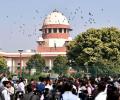
Justice Gavai's comment came while the apex court bench, also comprising Justice Augustine George Masih, was considering a fresh plea seeking an inquiry into the recent violence in West Bengal during anti-Waqf law protests.

The stage is set for a direct contest between NDA nominee C P Radhakrishnan and joint opposition candidate B Sudershan Reddy for the vice-presidential election. The BJP-led alliance has a clear edge in the poll necessitated due to the sudden resignation of Jagdeep Dhankhar.

Every word uttered by a minister has to be with a sense of responsibility at a time the country is undergoing "such a situation", the Supreme Court said on Thursday as it reprimanded Madhya Pradesh's Vijay Shah who is facing an FIR for his remarks targeting Col Sofiya Qureshi.

The Nagpur municipal chief has offered an unconditional apology to the Bombay High Court for the demolition of houses belonging to accused in a riots case, citing ignorance of Supreme Court guidelines on such actions. The civic officials were unaware of the Supreme Court's order, which mandates procedural safeguards before demolishing properties linked to riots accused, the commissioner stated in an affidavit. The court has granted the Maharashtra government two weeks to respond to the matter.
